Pablo Picasso - The Most Iconic Artist of the 20th Century
Pablo Picasso was born on October 25, 1881, in Málaga, Spain. He was the first child of José Ruiz y Blasco, a painter and art teacher, and María Picasso y López, a seamstress. His full name was Pablo Diego José Francisco de Paula Juan Nepomuceno María de los Remedios Cipriano de la Santísima Trinidad Ruiz y Picasso, but he later adopted his mother’s surname as his artistic signature.
Picasso showed an extraordinary talent for drawing and painting from an early age. He received formal art education from his father and at various schools, where he often rebelled against the academic conventions. He moved to Barcelona in 1895, where he joined a group of avant-garde artists and writers. He made his first trip to Paris in 1900, the cultural capital of Europe at the time, and settled there in 1904.
Picasso’s artistic career spanned more than seven decades, during which he created more than 20,000 artworks, including paintings, sculptures, prints, ceramics, and stage designs. He constantly explored new ways of expressing his vision and emotions, breaking the boundaries of traditional art forms and creating new ones. He was also influenced by various artistic movements and cultures, such as African art, Iberian art, Primitivism, Fauvism, Expressionism, Cubism, Neoclassicism, Surrealism, and Abstract Expressionism.
Picasso was not only a master of art, but also a master of life. He was a charismatic and flamboyant personality, who enjoyed fame and fortune. He was also a passionate and complex man, who had many affairs and marriages with women of different ages and backgrounds. Some of them were also his artistic partners, such as Fernande Olivier, Olga Khokhlova, Marie-Thérèse Walter, Dora Maar, Françoise Gilot, and Jacqueline Roque. He had four children: Paulo (with Olga), Maya (with Marie-Thérèse), Claude and Paloma (with Françoise).
Picasso died on April 8, 1973, at the age of 91, in Mougins, France. He left behind a legacy that has influenced generations of artists and changed the course of art history. He is widely regarded as one of the greatest artists of all time, and one of the most iconic figures of the 20th century.
Picasso’s Style and Influence
Picasso had an eclectic attitude to style, and although he usually followed a dominant approach at any given time in his career, he often moved interchangeably between different styles - sometimes even in the same artwork3. His style can be broadly divided into six periods:
The Blue Period (1901-1904)
- This period is characterized by the use of monochromatic blue tones to create somber and melancholic scenes of poverty, alienation, and despair. Some examples are The Old Guitarist (1903), La Vie (1903), and The Tragedy (1903).
The Rose Period (1904-1906)
- This period is marked by the use of warmer colors such as pink, red, and orange to depict more cheerful subjects such as circus performers, acrobats, harlequins, and lovers. Some examples are Family of Saltimbanques (1905), Boy with a Pipe (1905), and Gertrude Stein (1906).
The African-influenced Period (1907-1909)
- This period is influenced by African art, especially masks and sculptures from sub-Saharan Africa, which Picasso saw at the ethnographic museum in Paris. He incorporated geometric shapes, angular forms, and distorted features to create a new way of representing the human figure. Some examples are Les Demoiselles d’Avignon (1907), which is considered a milestone in modern art, and Three Women (1908).
Cubism (1909-1919)
- This is the most innovative and influential period of Picasso’s career, in which he co-founded Cubism with Georges Braque. Cubism is a radical art movement that challenged the traditional perspective and representation of reality by breaking down objects into geometric shapes and facets, and reassembling them in a new way that shows multiple viewpoints at once. Cubism can be further divided into two phases: Analytic Cubism (1909-1912), which focuses on the analysis and fragmentation of forms, and Synthetic Cubism (1912-1919), which focuses on the synthesis and collage of different materials and textures. Some examples are Portrait of Daniel-Henry Kahnweiler (1910), Ma Jolie (1911-1912), and Still Life with Chair Caning (1912).
Neoclassicism (1919-1924)
- This period is a return to a more realistic and classical style of painting, influenced by the post-war call for order and stability, and by Picasso’s admiration for the old masters such as Ingres, Velázquez, and El Greco. He also experimented with sculpture, creating monumental heads and figures in plaster and bronze. Some examples are Three Women at the Spring (1921), The Pipes of Pan (1923), and The Lovers (1923).
Surrealism (1924-1937)
- This period is influenced by the Surrealist movement, which aimed to express the subconscious and irrational aspects of the human mind through dreams, fantasies, and symbols. Picasso used distorted forms, biomorphic shapes, and vivid colors to create expressive and emotional images that often reflect his personal life and relationships. Some examples are The Three Dancers (1925), The Kiss (1931), and Guernica (1937), which is his most famous and powerful political statement against the horrors of war.
Picasso’s influence was profound and far-reaching for most of his life. His work in pioneering Cubism established a set of pictorial problems, devices, and approaches, which remained important well into the 1950s. He also inspired many other artists and movements, such as Dada, Futurism, Constructivism, Abstract Expressionism, Pop Art, and Conceptual Art. He is widely recognized as one of the most original and influential artists of the 20th century, who changed the way we see and understand art.
Picasso’s Artworks
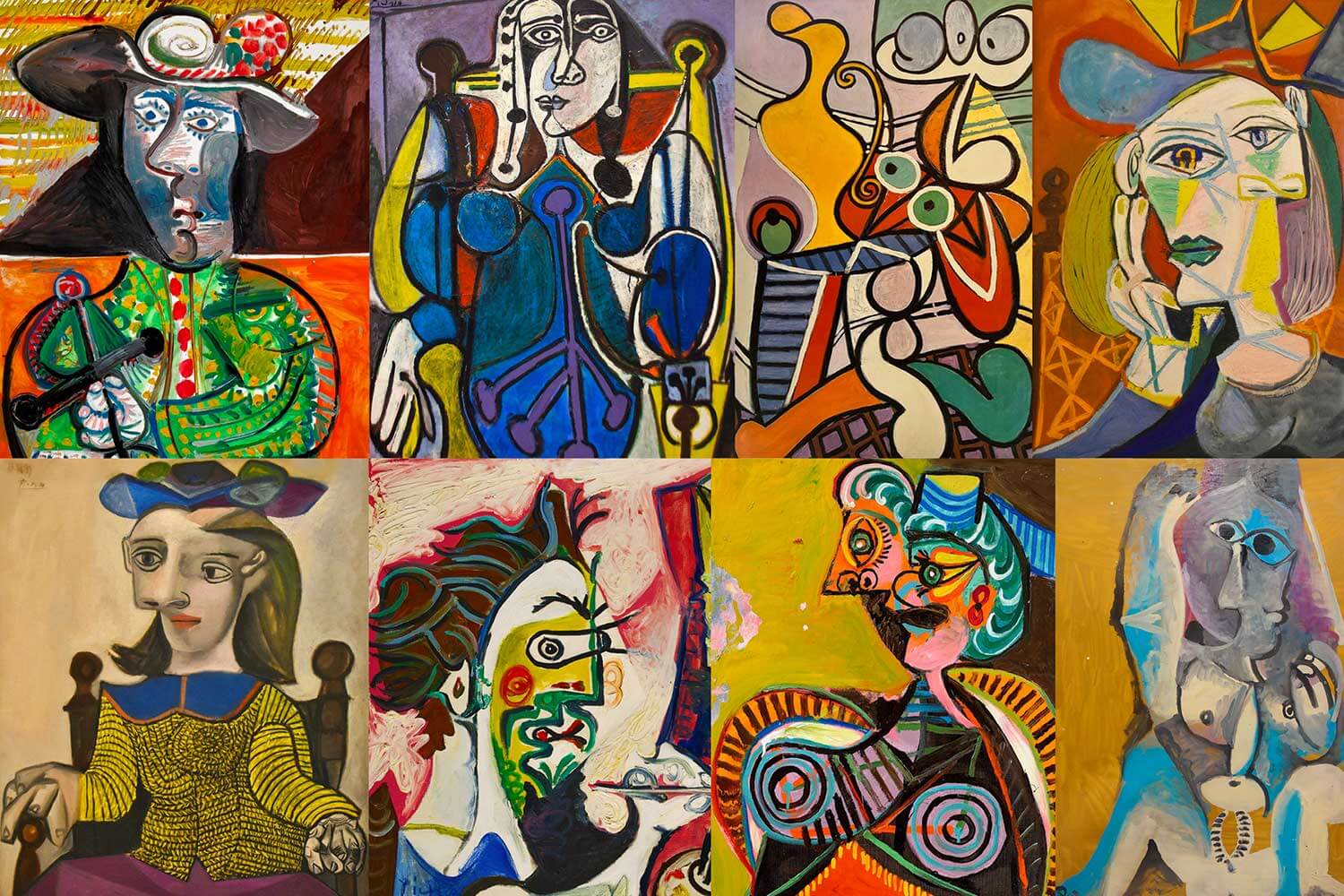
Picasso created thousands of artworks in various media, genres, and themes. Here are some of his most famous and representative works:
Breakfast 1953

Blue Face Portrait 1957

Blind Minotaur Guided by a Young Girl in the Night 1933-34

Bird 1939

Bathing on the Beach 1937

Ambroise Vollard 1909

Acrobat 1930

Acrobat Leaning on his Elbow 1922

Absinthe 1901

Tête de femme 1952

Tête 1971

Seated Woman with a Straw Hat 1938

Femme dans un Rocking-Chair 1956

Motherhood 1971

Woman with a Blue Collar 1941

Le Gourmet 1901

Horst Antes 1971

Composition Peasants 1906

Still Life with Lemon and Jug 1936

Buffalo Bill 1911

Bull Skull, Fruit, Pitcher 1939

Bullfight 1959

Bust of a Reclining Woman 1970

Bust of a Woman in a Blue Dress Necklace 1943

Bust Of A Woman In A Striped Hat 1939

Buste de Femme 1940

Buste de Femme Endormie III 1970

Buste de Femme Juin-Juillet 1907
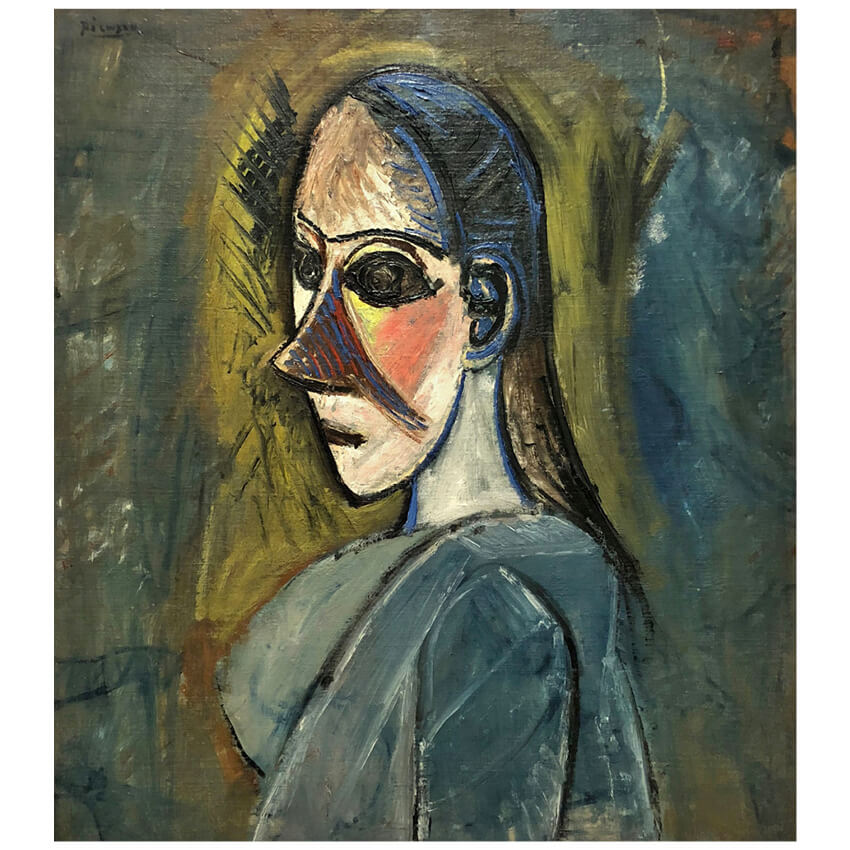
Dame in Blau Paris 1901

Dans la Loge (Portrait de Jane Avril) 1901

Die Küche 1948

Dora Maar with Green Fingernails 1936

Earthenware Hand Painted Plate 20th

Female Figure in a Hat, Seated on a Chair 1938

Femme Accoudee 1921

Femme Assise 1909

Femme Au Bouquet 1909

Femme lancant Une Pierre 1931

Femmes à la Toilette 1956

Figure (Seated Woman) 1930
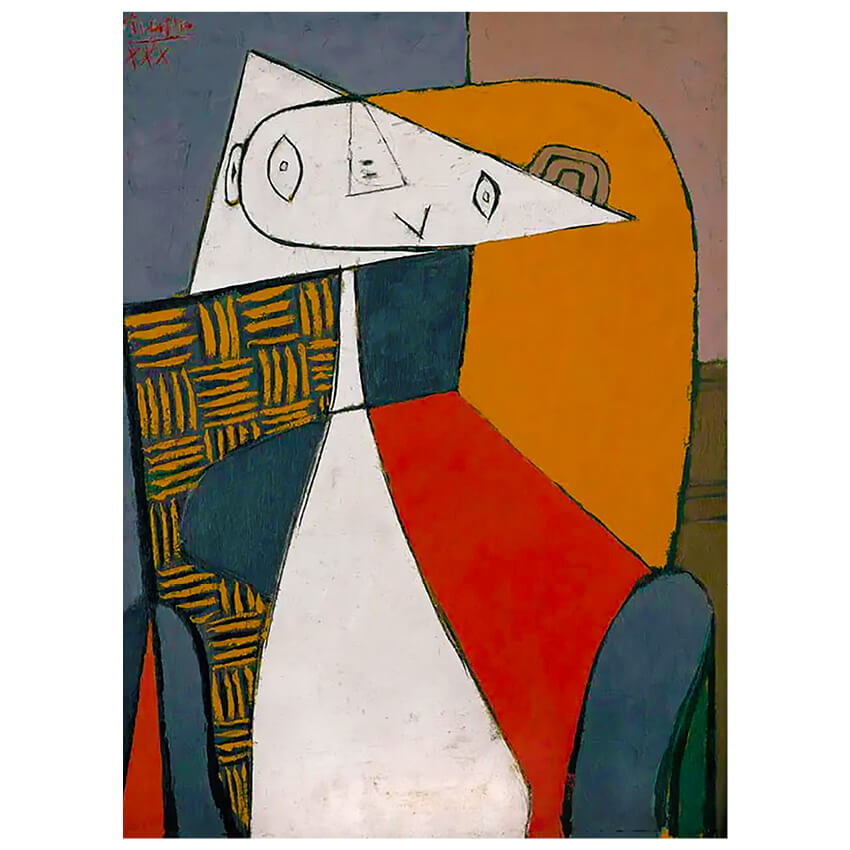
Glass, Pipe and Tobacco Pack 1919

Goat with Shepherd Playing Flute 1906

Harlequin Head 1962

Harlequin Musician 1924

Head 1972

Head of a Man 1972

Head of a Man with a Pipe 1969

Head of a Woman 1907

Head of a Woman 1924

Head of a Woman Reading 1953

Jacqueline 1962

Jacqueline lisant 1964

Jacqueline with Hands Crossed 1954

La Coiffure Close Up 1906

La Femme au Stylet 1931

La Gommeuse 1901

Landscape 1908

Le dejeuner sur l'herbe 1961

Le Peintre II 1963

Lying Woman 1946

Man with Straw Hat and Ice Cream Cone 1938

Matador 1970

Mère et Enfant 1907

Motherhood 1971

Musketeer and Seated Nude 1967

Naked Woman Lying with Necklace 1932

Nude in a Black Armchair 1932

Nude, Green Leaves and Bust 1932

Olga in Mantilla 1917

Paloma and Her Doll 1952

Paysage Mediterraneen 1952

Pernodflasche mit Glas 1912

Personnage a la Pipe 1971

Play Flute 1932

Portrait de Marie-Therese 1932

Portrait of a Woman 1940

Portrait of a woman in profile 1962

Portrait of Lee Miller 1937

Portrait of Lee Miller 1938

Portrait of Nusch Eluard 1937

Profil 1930

Profil Droit 1933

Reading (Marie Thérèse Walter) 1932

Reclining Nude 1932

Reclining Nude and Man Playing the Guitar 1970

Rest (Marie-Teresa Walther Olga Khokhlova) 1927

Seated Nude 1969

Seated Woman (Portrait of Marie-Therese) 1937

Seated Woman 1908

Seated Woman 1938

Seated Woman in a Suit Geneviève Laporte 1951

Seated Woman Resting on Elbows 1939

Seated Woman with Hat 1939

Sitting Woman (Dora Maar) 1941

Smiling Woman 1901

Still Life with Blue Guitar 1924

Stilleben mit Kochtopf 1945

Summer landscape 1902

Taureau Mourant 1934
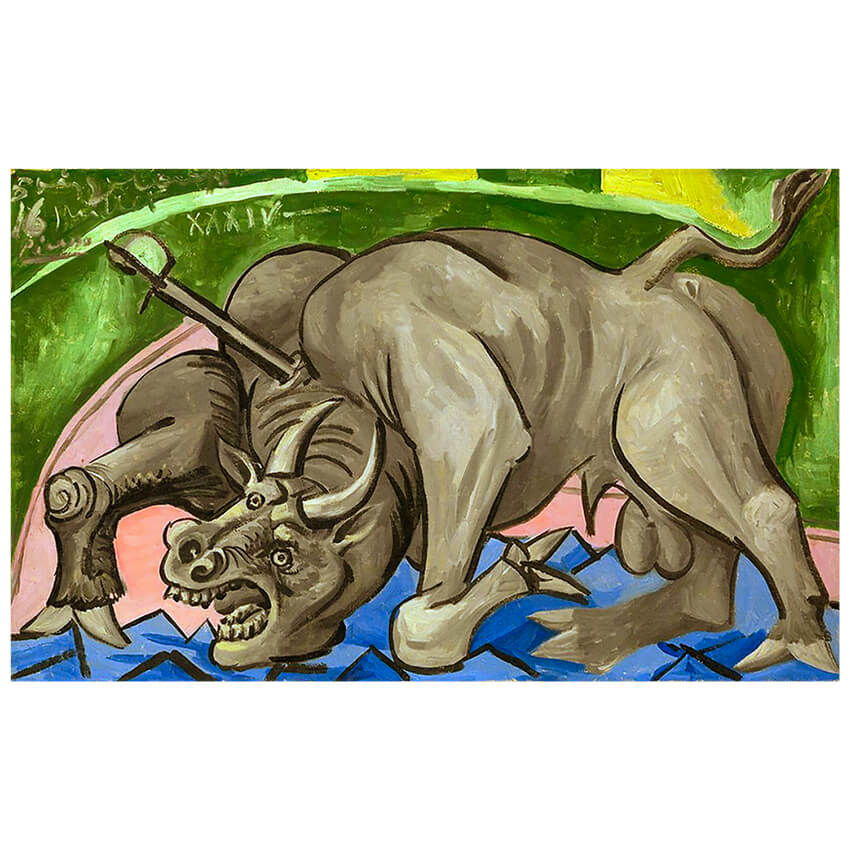
Tête de Femme (Dora Maar) 1937

Tete de Marie Therese 1932-34

The art dealer Clovis Sagot 1909

The Artist's Sister 1899

Pablo Picasso The Embrace 1963

The Kiss 1967
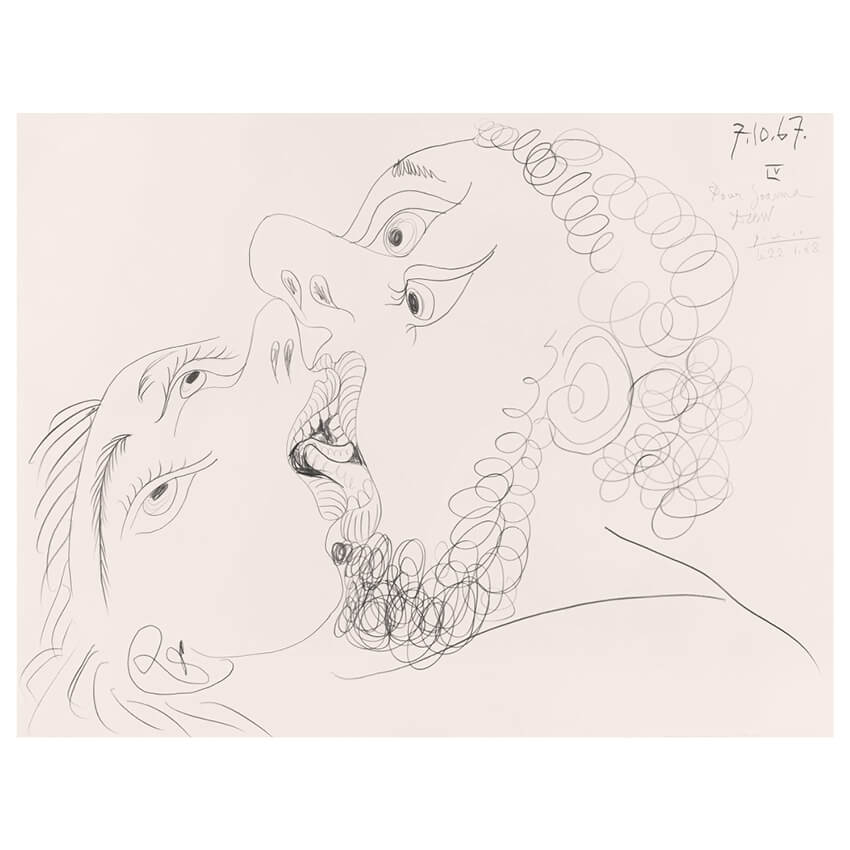
The Painter and His Model 1971

The Sailor 1938

The Weeping Woman 1937

Three Figures under a Tree 1908

Untitled 1923

Verre et pichet 1944

Watermelon Eater and Man Writing 1965

Weeping Woman with Handkerchief 1937

Woman in a Multicolored Hat 1939

Woman in an Armchair 1948

Woman in Green Dress 1937

Woman in Green Hat and Brooch 1941

Woman in hat and fur collar 1937

Woman in the Armchair Portrait of Françoise Gilot 1946

Woman lying on cachou background 1938

Woman Reading 1953

Woman Seated and Sleeping 1947
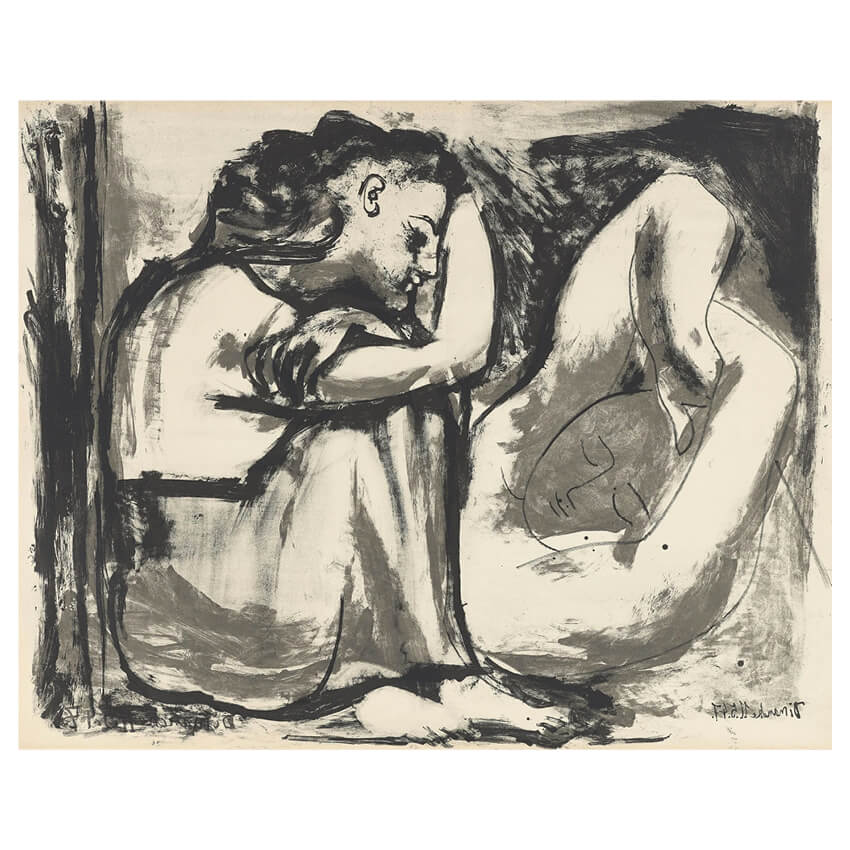
Woman Seated in an Armchair 1939

Woman Seated in an Armchair 1948

Woman with a Blue Collar 1941

Woman with a Blue Hat 1939

Woman with a Fan 1908

Woman with a Hat 1938

Woman with a Yellow Hat (Dora Maar) 1939

Woman with Artichoke 1941
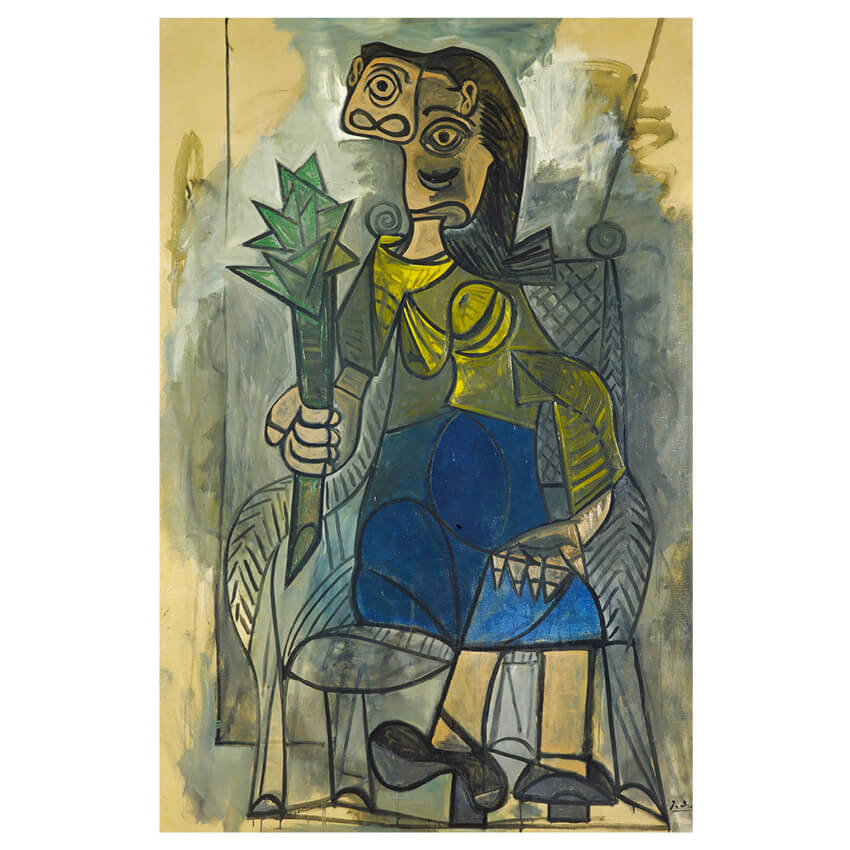
Woman with blue hat 1901

Woman with Fan 1909

Woman with her hair in a small bun 1904

Woman with Parasol Lying on the Beach 1933

Woman's Bust 1938
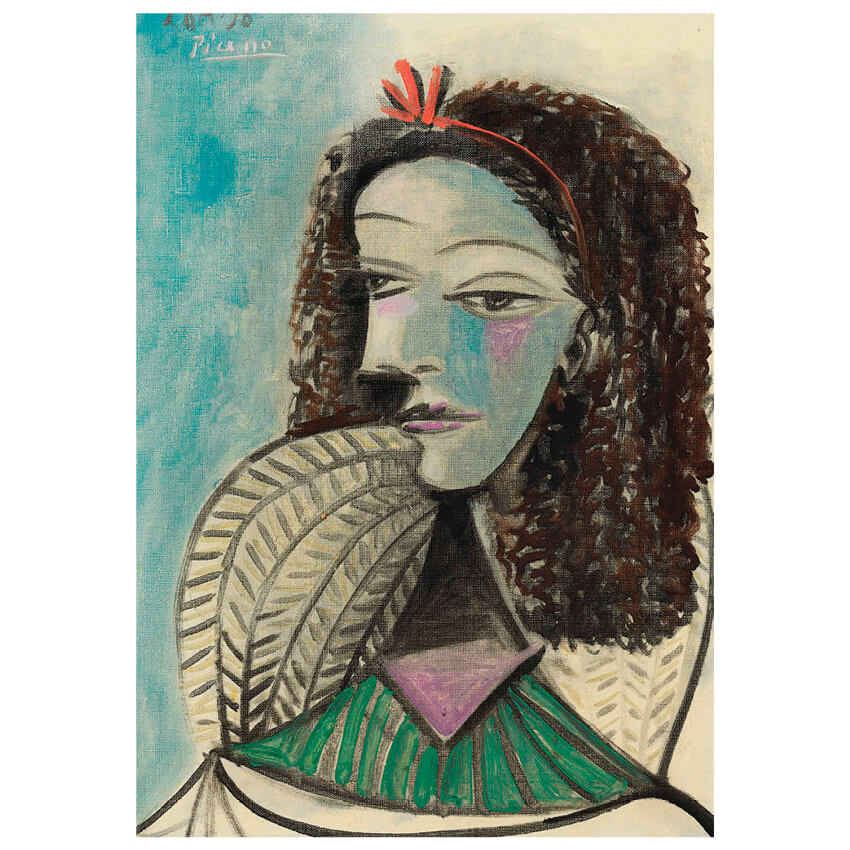
Women in Blue 1949

Yellow Sweater 1939
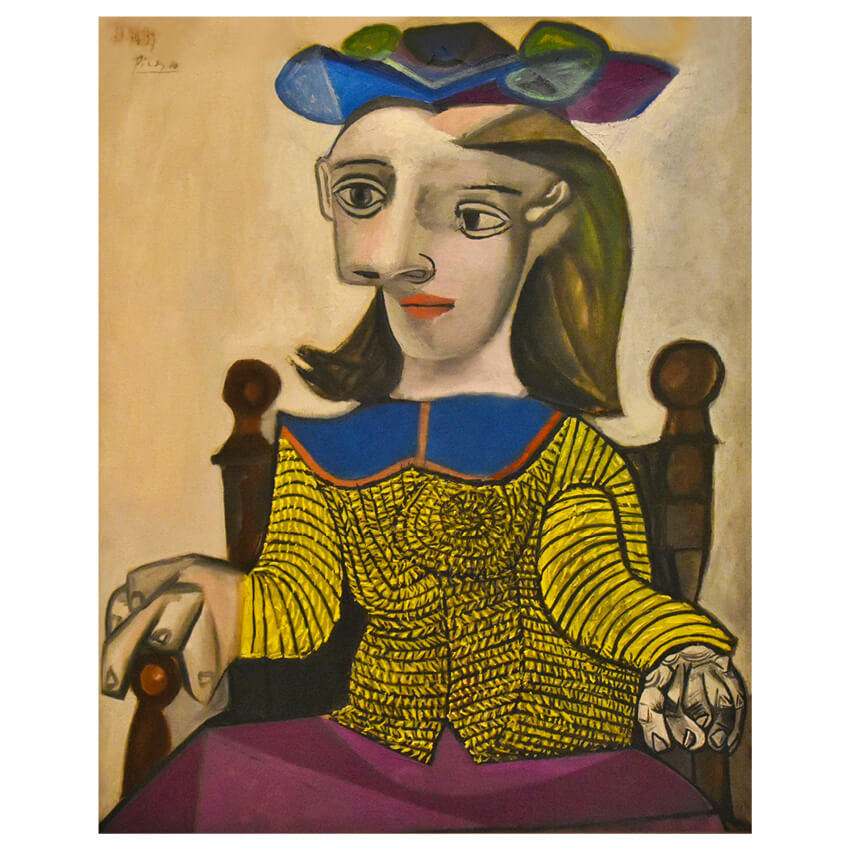
Young Woman with Mandolin 1932

Zwei Zecher 1933

Woman Seated in a Woven Armchair in Gray 1953

Still Life with a Pedestal Wood Mount 1931

Naturaleza Muerta con una Mandolina 1924

Pedro Mañach 1901

Picador 1900

The Sculptor 1931

The Old Guitarist 1903

Girl with a Mandolin 1910

Guernica 1937

FAQs
-
Who was Pablo Picasso?
Pablo Picasso (1881-1973) was a Spanish painter, sculptor, printmaker, ceramicist, and one of the most influential artists of the 20th century. He is known for co-founding the Cubist movement and for his contributions to Surrealism and Symbolism. -
What is Picasso most famous for?
Picasso is most famous for his revolutionary art styles, particularly Cubism. Some of his iconic works include "Guernica," "Les Demoiselles d'Avignon," and "The Weeping Woman." -
How many paintings did Picasso create?
Picasso created an estimated 50,000 artworks during his lifetime, which included paintings, sculptures, ceramics, and more. -
Where can I see Picasso's art in person?
You can view Picasso's art in many prominent museums worldwide, including the Museo Picasso in Barcelona, the Picasso Museum in Paris, and the Museum of Modern Art (MoMA) in New York. -
What is the significance of "Guernica"?
"Guernica" is one of Picasso's most famous paintings, depicting the horrors of the Spanish Civil War. It is considered a powerful anti-war symbol and is displayed at the Museo Reina Sofia in Madrid. -
How did Picasso's art evolve over time?
Picasso's art went through various phases, including the Blue Period, Rose Period, Cubism, and Surrealism. His constant innovation and experimentation make his work diverse and fascinating. -
Are there any famous quotes by Picasso?
Yes, one of his famous quotes is: "Every child is an artist. The problem is how to remain an artist once he grows up." This reflects his belief in nurturing creativity. -
How can I determine the authenticity of a Picasso artwork?
To authenticate a Picasso artwork, consult a reputable art expert or appraiser. They will assess its provenance, signature, and other factors to confirm its authenticity. -
What is the value of a Picasso painting today?
The value of a Picasso painting varies greatly based on factors like its rarity, provenance, and the specific work. Some of his pieces have fetched tens of millions of dollars at auctions. -
Can I buy Picasso prints or reproductions?
Yes, you can purchase Picasso prints and reproductions. These are a more affordable way to enjoy his art at home, though they are not original works. -
What is Picasso's influence on modern art?
Picasso's influence on modern art is immeasurable. He reshaped the art world by challenging traditional techniques and perspectives, inspiring countless artists to think beyond conventions. -
How can I learn more about Picasso's life and art?
You can explore books, documentaries, and exhibitions dedicated to Picasso's life and work. These resources provide valuable insights into his incredible legacy. -
Did Picasso receive any awards or honors during his lifetime?
Yes, Picasso received numerous awards and honors, including the Lenin Peace Prize and the Presidential Medal of Freedom. -
What is Picasso's legacy in the art world?
Picasso's legacy lies in his ability to transform and challenge art continually. His work continues to inspire and influence artists and art enthusiasts around the world. -
What were some of Picasso's favorite subjects to paint?
Throughout his career, Picasso had several recurring themes, including women, animals, and mythological figures. These subjects are prominent in many of his artworks.
15 Most Iconic Pablo Picasso Paintings
| Blue Period (1901-1904) | |
|---|---|
| 1. The Blue Room | 1901 |
| 2. La Vie | 1903 |
| 3. The Old Guitarist | 1903 |
| Rose Period (1904-1906) | |
| 4. Les Noces de Pierrette | 1905 |
| 5. Boy with a Pipe | 1905 |
| 6. Family of Saltimbanques | 1905 |
| African Period (1907-1909) | |
| 7. Les Demoiselles d'Avignon | 1907 |
| 8. Head of a Woman | 1907 |
| 9. Seated Woman (Dora Maar) | 1938 |
| Cubism (1909-1919) | |
| 10. Woman with a Guitar | 1910 |
| 11. Les Trois Danseuses | 1925 |
| 12. Still Life with Guitar | 1921 |
| Surrealism (1920s-1930s) | |
| 13. The Weeping Woman | 1937 |
| 14. Guernica | 1937 |
| 15. The Dream | 1932 |

Written by Samo Polegek